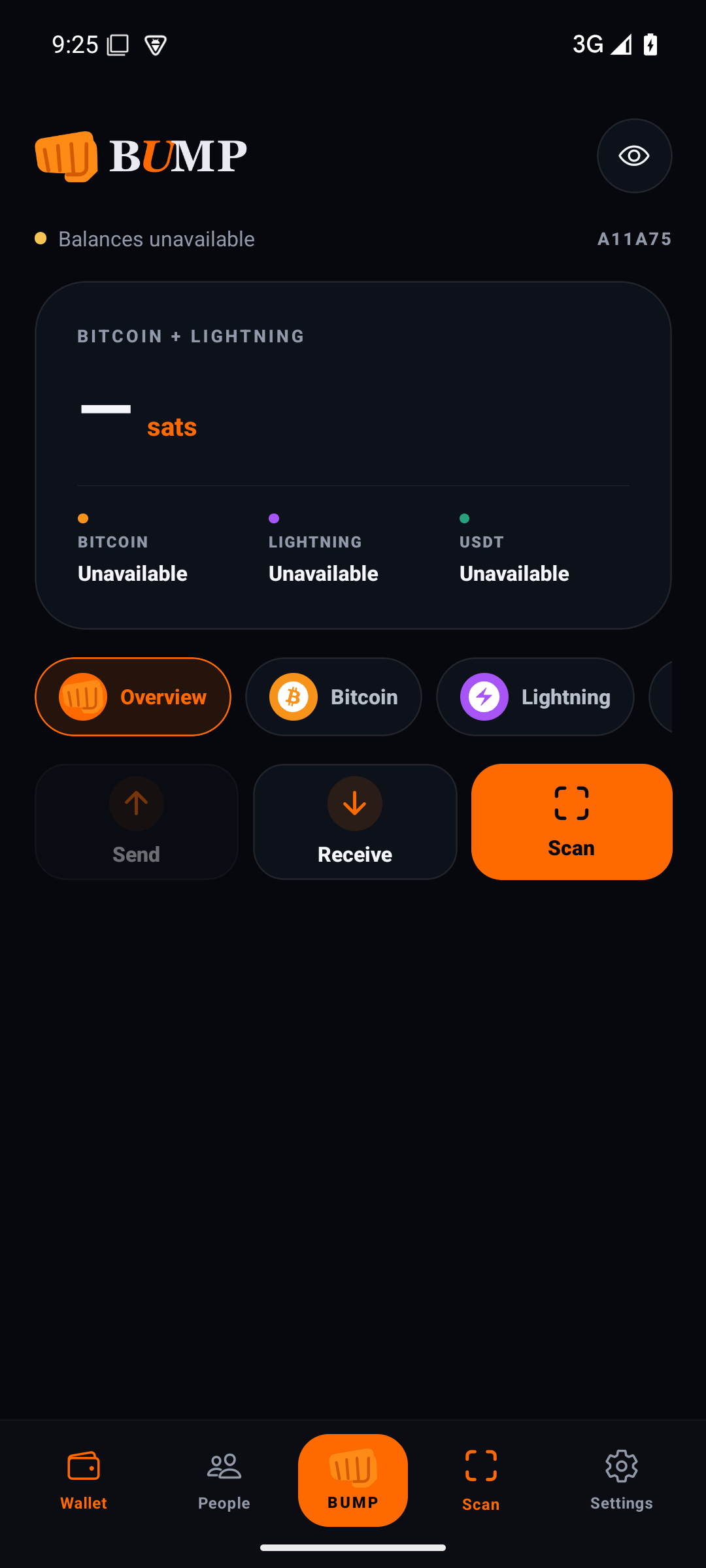
Meet.
Tap, nearby discovery, scan, or choose a known contact—the relationship comes before the route.

BUMP is the personal operating point for permissionless value: a self-contained, Bitcoin-first experience where the phone holds approval, people choose the rail, and every payment can become a doorway into a wider sovereign ecosystem.
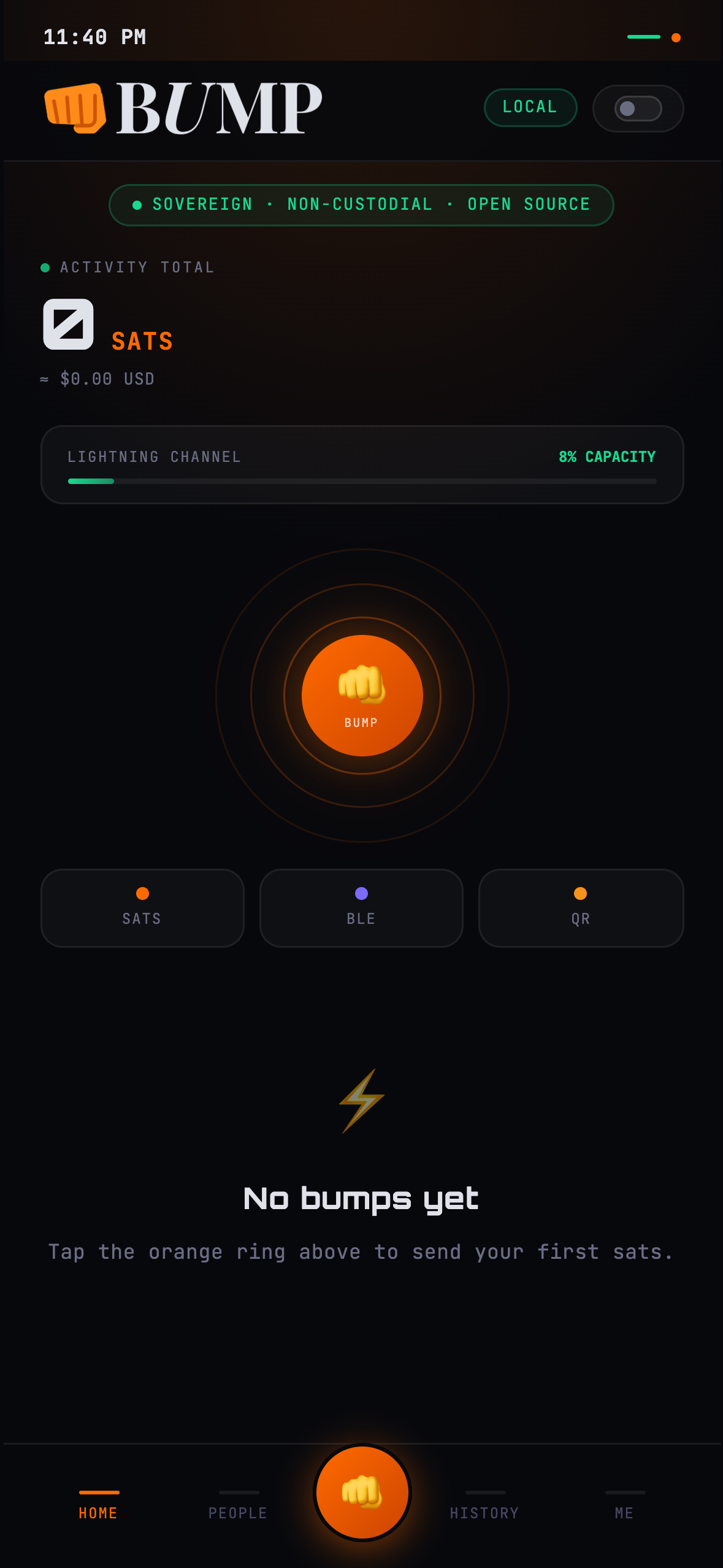
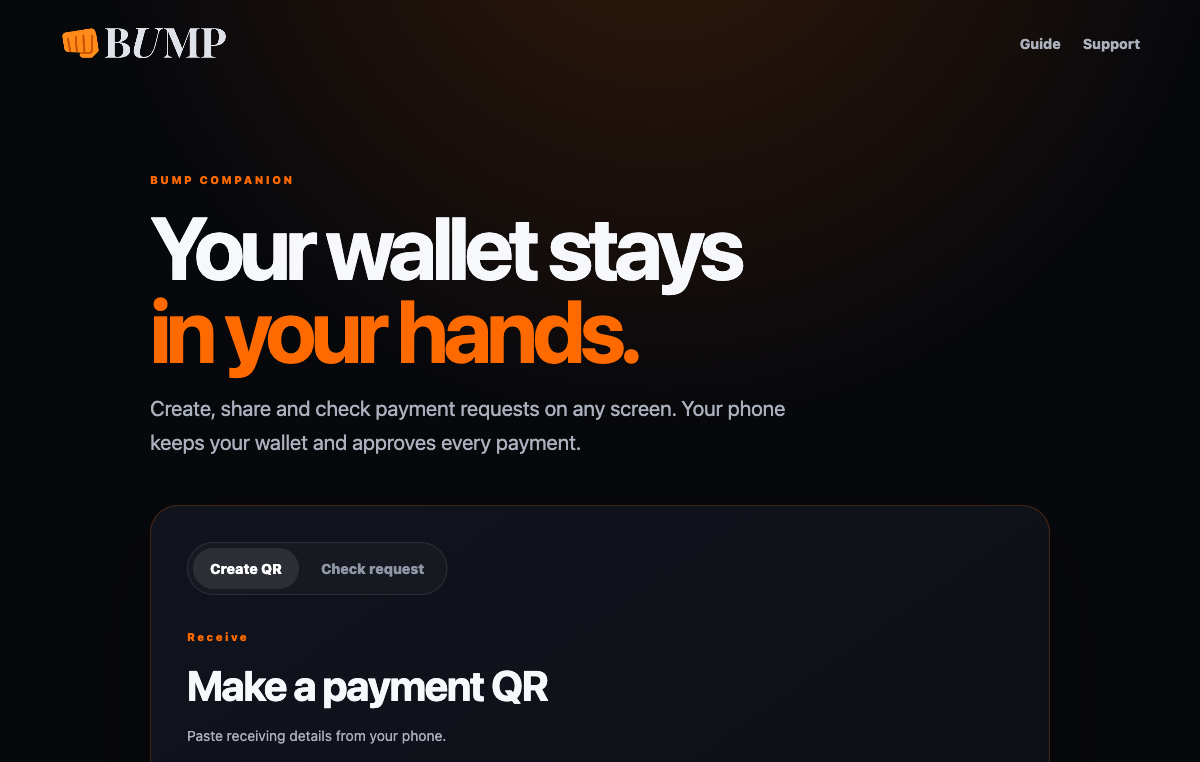
The public page mirrors the choices visible in the current application without pretending to execute a payment: sats for settlement, nearby discovery for human handoff, and QR for a clear request.
The app keeps the decision close to the person, not a custodian or marketplace.
Existing payment systems begin by making two people into account records. BUMP begins with the moment itself: a known person, a nearby device, a visible request, and an approval that remains with the person holding the phone.
Tap, nearby discovery, scan, or choose a known contact—the relationship comes before the route.
Make the amount, destination and rail visible before the device asks for an approval.
Use Bitcoin, Lightning or USDT while the person keeps the approval boundary and the payment history close.
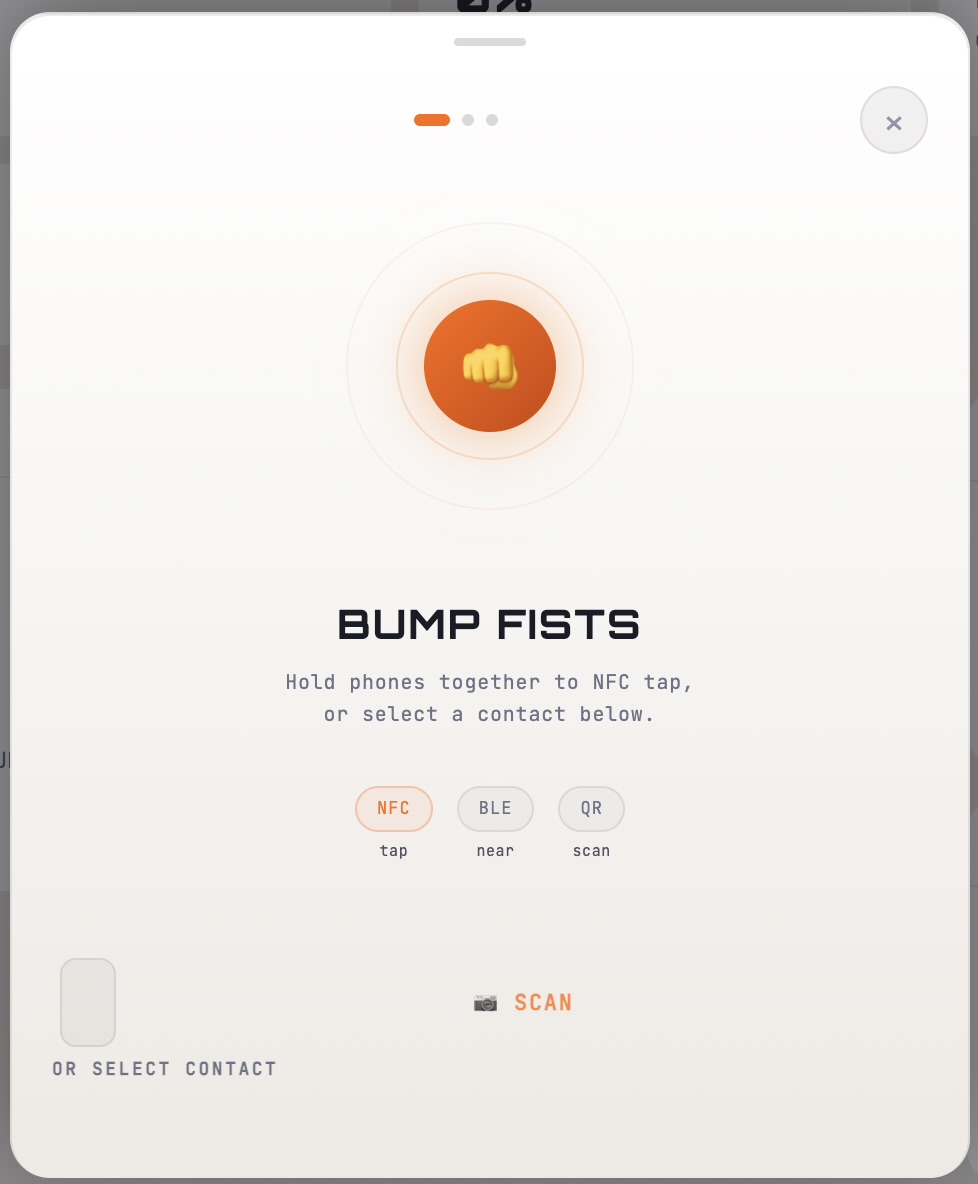
BUMP keeps the human approval boundary on the phone, then connects that authority to practical payment rails, trusted people and the services a sovereign ecosystem needs—without making the user surrender control to a platform.
Bitcoin, Lightning and USDT balances, trusted people and the core send, receive and scan actions remain in the device the person controls.
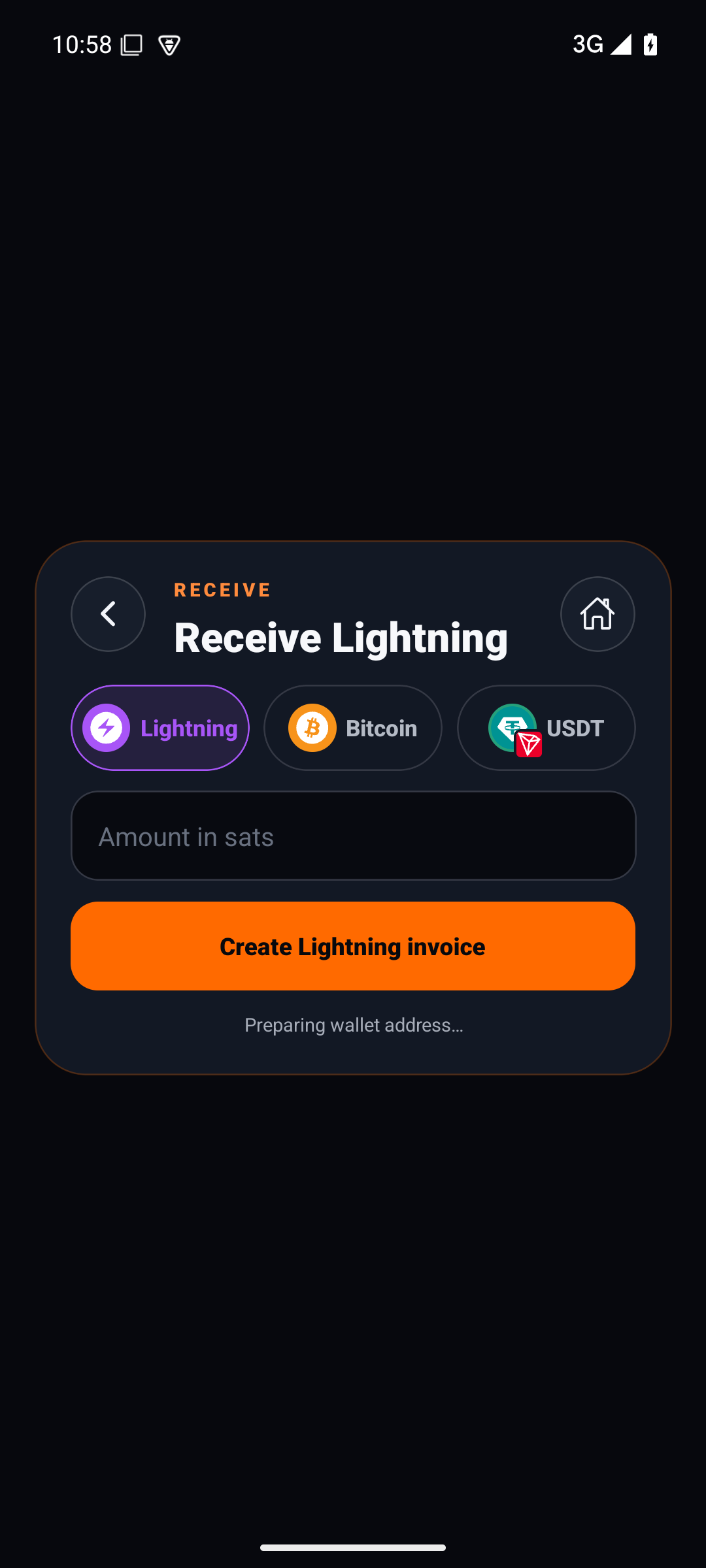
Create a Bitcoin address, Lightning invoice or USDT request and share it directly or as a QR—without turning a human payment into a bank application.
Prepare or inspect requests on a larger screen while final approval stays on the phone, ready to connect to wider sovereign services by choice.
BUMP’s node foundation is built to preserve more than spendability: a portable local identity, clear consent for connected applications, and a record of trusted relationships and receipts that is not owned by a marketplace.
A protected device-held node identity anchors the wallet relationship so a user is not reduced to an email login or a custodial account.
Connected services can be granted only the narrow capability required—such as preparing a payment or reading a balance—and can be revoked without handing over recovery material.
The design carries forward the protected node state, trusted relationships and history through recovery, with a new device identity taking accountable control.
These are the real BUMP application screens—not invented product art. Each one expresses a different part of the personal node.